
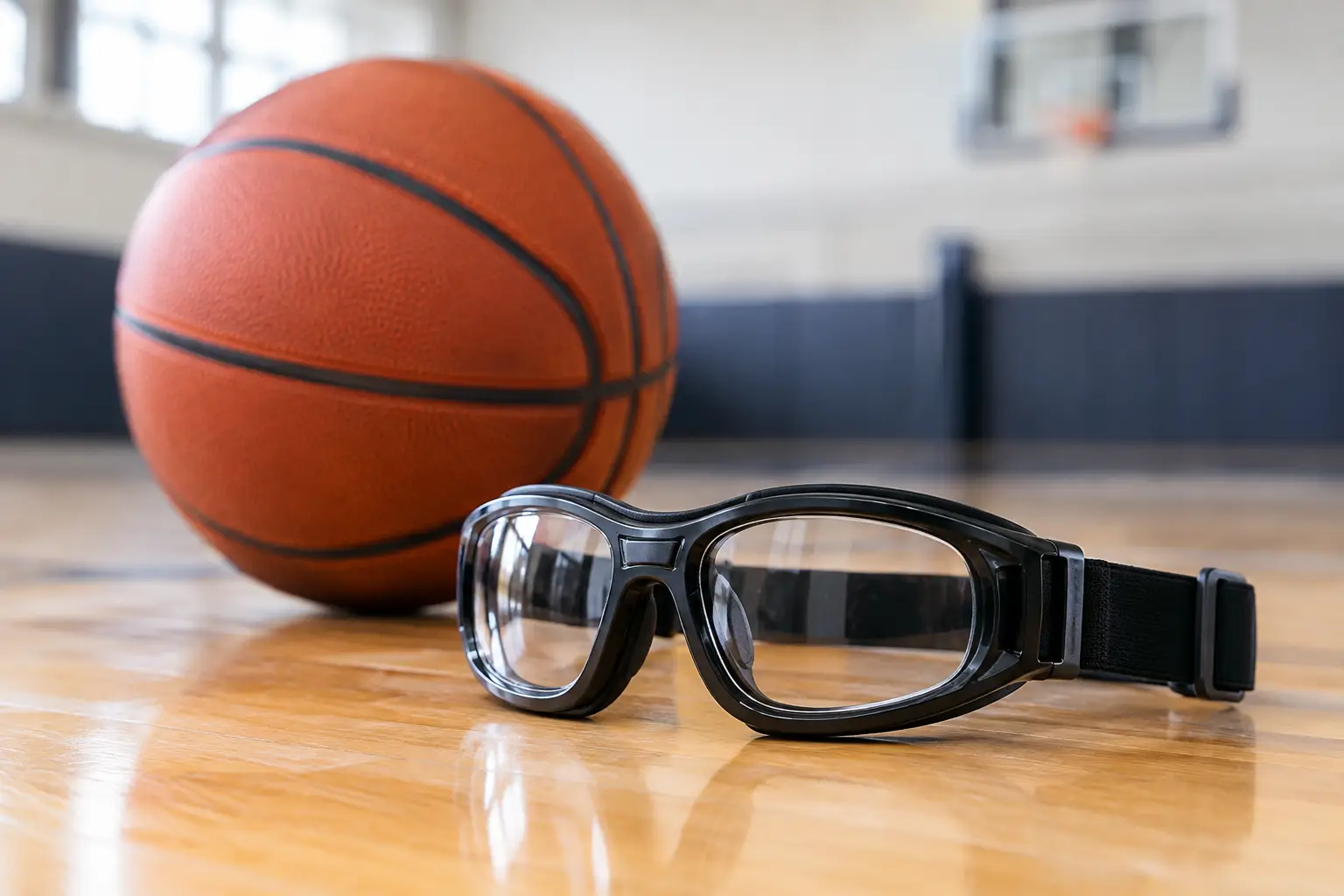
A loose frame, fogged lenses, or a prescription that shifts when you look toward the rim can change how you play. Prescription basketball goggles adults can trust should do more than help them see the scoreboard. They should stay put through contact, give you a clear view across the court, and feel secure enough that you stop thinking about your eyewear.
For adult players, the right setup is rarely just a matter of adding a prescription to a sports frame. Basketball asks a lot from eyewear: quick head turns, changing light, sweat, peripheral awareness, and the occasional elbow or ball in the face. A thoughtful fitting accounts for all of it.
Why regular glasses are a poor substitute
It is tempting to wear everyday glasses for a casual run, especially if you only play once a week. But everyday frames are designed for daily life, not court movement or impact. They may slide down your nose when you sweat, shift during a rebound, or sit too close to your face. Standard ophthalmic lenses can also be a concern in a contact sport, depending on the material and frame.
Basketball goggles are built around a different priority: stable, protective coverage. Most use a wrap-style frame, an adjustable strap, and cushioning around the eye area to keep the frame more consistently positioned. That can make a real difference when you are tracking a pass from the corner, scanning for a defender, or looking up at the basket.
That does not mean every goggle style works for every player. A close-fitting, highly wrapped model may offer a more contained feel, while another player may prefer a slightly roomier fit for ventilation. The best choice depends on your prescription, face shape, league requirements, and how intensely you play.
What prescription basketball goggles for adults need to get right
A prescription that works in motion
A sports prescription is not simply your everyday prescription placed in a different frame. Basketball goggles sit differently from conventional eyeglasses, often with more wrap and a different vertex distance – the space between the lens and your eye. Those details can affect how the prescription feels, particularly for stronger prescriptions, astigmatism, prism, or progressives.
For many players, single-vision distance lenses are the most practical option. They keep the court, teammates, hoop, and ball clear without the visual transitions of a multifocal lens. If you normally wear progressives, that does not automatically rule out sports goggles. It does mean the lens design deserves an honest conversation based on where you need your vision most while playing.
A licensed optician can review the prescription, the frame shape, and your playing needs before recommending a lens approach. This is especially worthwhile if you have had sports eyewear that felt distorted at the edges or never seemed to line up correctly.
A frame that stays where it belongs
Fit is protection, comfort, and visual clarity all at once. When goggles slip lower on the nose, you may begin looking through the wrong part of the lens. When the strap is too tight, pressure points can make a short game feel surprisingly long. When the frame is too wide, it may shift with every sprint.
A proper fitting looks at more than whether the goggles appear to fit. It considers bridge contact, temple and cheek clearance, strap tension, frame width, and how the goggles behave when you move. If you wear a helmet for another sport or tend to play with a headband, bring that into the conversation too. Small details influence the final comfort.
An adjustable strap should feel secure, not punishing. Players sometimes over-tighten it to compensate for a frame that is not the right shape. The better answer is usually a better fit, not more tension.
Lens material and impact-minded design
For court sports, lens material matters. Sports goggles are commonly paired with impact-resistant lens options selected for the frame and use case. The goal is not to make an eyewear promise no product can make, but to choose a setup intended for active play rather than adapting everyday glasses beyond their purpose.
The frame itself matters just as much. Look for a sports-specific design with cushioning, a stable strap system, and lenses that are properly secured within the frame. If your league, gym, or tournament has equipment rules, check them before ordering. Some organized leagues have particular expectations for eyewear on the court.
Clear vision without constant fogging
Fog is one of the fastest ways to lose confidence in sports eyewear. It usually comes down to warm skin, sweat, humidity, and limited airflow. A goggle that seals very closely can feel secure but may need more attention to ventilation. A more open design may breathe better but offer a different fit and coverage profile.
There is no one fog-proof answer for every player. A well-fitted frame with considered ventilation is a good starting point. Keeping lenses clean also helps, since skin oils and residue can make fogging and smearing more noticeable. Use a lens-safe cleaner and microfiber cloth rather than a shirt hem or paper towel, which can leave scratches over time.
If fog is a recurring problem, mention it during your fitting. It is useful information, not a minor complaint. The way you play, the gym conditions, and how closely the frame sits against your face all shape the recommendation.
Choosing goggles for pickup games, leagues, and serious play
Your basketball routine should guide the decision. Someone playing a relaxed weekly pickup game may value a lighter feel and easy wear. A player in a competitive league may prioritize a firmer, more protective fit that remains stable through fast transitions and physical defense.
Think about when you play, too. Brightly lit school gyms, changing daylight at outdoor courts, and evening recreation centers can all feel different. Clear lenses are often the straightforward choice for indoor basketball. If you play outdoors, lens tint and sun management deserve a separate discussion, especially because a tinted lens that feels comfortable outside may be too dark for an indoor gym.
Contact lens wearers also have options. Some prefer contacts for play and goggles with non-prescription lenses for protection, while others want the convenience and confidence of a prescription goggle setup. Neither choice is automatically better. Contacts can be convenient, but dry eyes, dust, wind, and long playing sessions may influence what feels best for you.
The fitting details online ordering cannot see
Sports eyewear is one category where in-person guidance can save frustration. A product photo cannot show whether a frame rests against your cheeks when you smile, whether the strap will hold its position, or whether the lens position matches your pupils. Those are not cosmetic details. They affect how clearly and comfortably you see.
At XO OPTIX, prescription sports eyewear is approached as a use-case conversation, not a quick frame transaction. A licensed optician can help connect the details: your prescription, your court habits, your preferred coverage, your face shape, and the demands of the game. For players in Coquitlam, Port Coquitlam, Port Moody, and nearby Greater Vancouver communities, that also means having a local place for adjustments when a strap loosens or a fit needs refinement.
If you have a high or complex prescription, say so from the beginning. Some goggle shapes and lens designs are more suitable than others, and it is better to choose realistically than force a prescription into a frame that compromises clarity or comfort.
Care that keeps your goggles game-ready
A little care extends the useful life of sports eyewear. Rinse away grit before wiping the lenses, dry the goggles with a clean microfiber cloth, and store them in a protective case rather than loose in a gym bag. Check the strap and frame periodically, particularly after a hard fall or collision.
Do not ignore a change in fit. A goggle that used to sit well but now slides, pinches, or leaves a pressure mark may simply need an adjustment or replacement part. Sports eyewear works hardest when its fit remains intentional.
The right basketball goggles should leave you free to focus on the next pass, the next cut, and the next shot. Your eyes do not play from the sidelines, so your eyewear should not feel like an afterthought.
Leave a Reply