
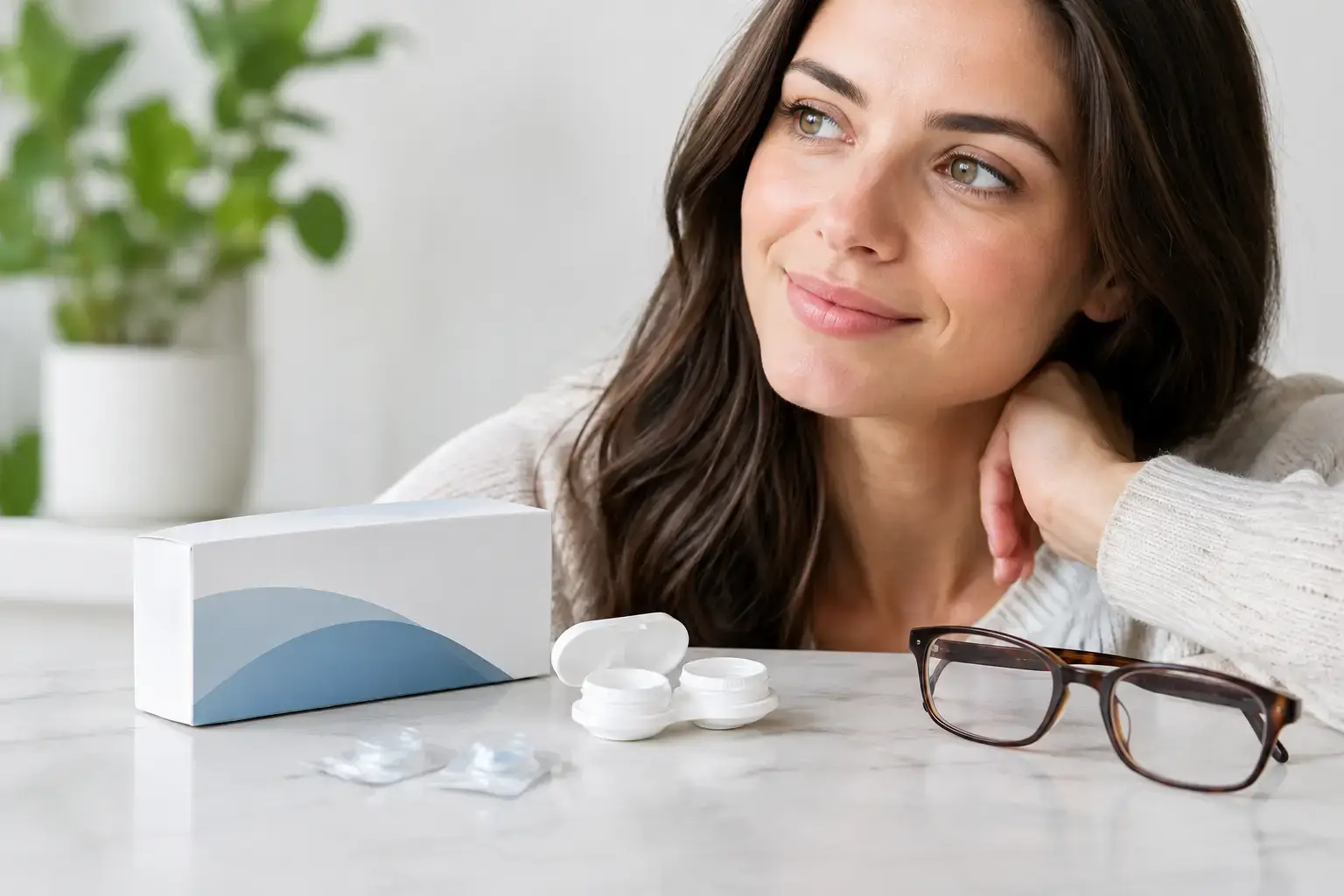
Light sensitivity can make an ordinary workday feel needlessly demanding. A bright meeting room, a laptop screen, reflections off wet pavement, or a grocery store aisle can all become factors worth managing. This Avulux lens review looks at what makes these lenses different, who may want to consider them, and why a thoughtful fitting matters as much as the lens itself.
What Are Avulux Lenses?
Avulux lenses are designed for people with episodic migraine who experience sensitivity to light. Rather than simply making everything darker, the lens technology is intended to filter specific wavelengths of light while allowing a more balanced amount of other visible light through.
That distinction matters. Standard sunglasses can be useful in bright outdoor conditions, but they are not necessarily comfortable or practical indoors. A very dark tint may also change how you see color, reduce detail in lower light, or make screen-based work harder. Avulux lenses are made with daily environments in mind, including indoor lighting, screens, commuting, and time outdoors.
The lens has a subtle rose-toned appearance. It is more noticeable than a clear lens, but generally less dramatic than many deep migraine tints. For people who need to wear their eyewear in professional, school, and social settings, that balance can be part of the appeal.
Avulux eyewear is not a cure for migraine, and no lens can promise the same experience for every person. Light sensitivity is personal. Its triggers, intensity, and timing can vary significantly, even for the same individual from one day to the next. These lenses are best viewed as one possible comfort tool to explore alongside a person’s usual migraine care.
Avulux Lens Review: Where They May Fit Best
The most useful question is not, “Are these lenses good?” It is, “Would these lenses make sense in my actual day?” Because your eyes do not live on an eye chart.
For many people, the answer depends on where light sensitivity shows up most often. Someone who spends hours switching between video calls, documents, and overhead office lighting may have different needs from someone who is mainly bothered by glare while driving. A college student moving between lecture halls, transit, and screen-heavy study sessions may need something that works across several environments without constantly changing glasses.
Avulux lenses can be worth discussing if you are looking for a wearable option for common light-sensitive moments such as:
- Extended screen use under office or classroom lighting
- Bright retail, medical, or public indoor spaces
- Daytime driving, especially when glare adds visual discomfort
- Outdoor errands, walking, or commuting where full sunglasses may feel too dark for every situation
The goal is not to make the world dim. It is to find an eyewear option that feels usable enough to become part of your routine.
A lens for indoors and outdoors is a trade-off
One pair that can move between environments is convenient, but no lens is perfect for every lighting condition. People who spend long periods in intense direct sun may still prefer dedicated sunwear for certain activities. Likewise, someone who works primarily in a dim studio may find even a subtle tint changes their visual preference.
This is why trying on a sample lens in person can be more useful than evaluating the concept alone. Color perception, contrast preference, prescription strength, frame fit, and daily lighting all shape the experience.
What the Lens Looks Like in Everyday Wear
A practical Avulux review should address appearance, not just technology. The lens tint is often a deciding factor for people who need to wear glasses at work, school, or around clients. It has a refined rose hue that reads as intentional rather than overly clinical, particularly when paired with a frame that suits the wearer.
Frame choice makes a real difference. A slim metal frame can create a lighter, more understated look, while a bolder acetate frame can make the tint feel like a considered style choice. For those who already wear prescription glasses, the option of incorporating the lens into a chosen frame can be more appealing than relying on a one-style solution.
Fit also affects comfort. Frames that slide, pinch behind the ears, sit too close to the cheeks, or allow distracting reflections can become tiring quickly. This is especially relevant for anyone who plans to wear their lenses through a full workday or during a migraine-sensitive period. The best lens in the wrong frame is still the wrong pair of glasses.
Prescription Lenses, Non-Prescription Options, and Clip-Ons
Avulux lenses may be considered in prescription and non-prescription formats, depending on individual vision requirements and the available lens options. A proper conversation should begin with how you normally see, not with the tint.
If you wear a single-vision prescription for distance, reading, or computer work, your Avulux pair may need to support that task clearly. If you wear progressives, the frame needs enough depth and the right positioning to create a comfortable reading and distance experience. Higher prescriptions may require additional care in lens design, frame selection, edge thickness, and cosmetic balance.
Custom clip-ons can be an especially thoughtful option for people who already have a well-loved prescription frame. They can also be useful when you want the flexibility to wear the Avulux filter over your regular glasses instead of purchasing a second complete prescription pair. The result depends on the shape of the original frame and how precisely the clip-on is made. A generic over-glass solution may be convenient, but it rarely offers the same fit, coverage, or finish as a custom-made piece.
For teens and young adults age 12 and up, practical details matter even more. Will they actually wear the glasses at school? Do they need them for computer work, transit, sports sidelines, or all of the above? A comfortable frame and a plan that fits their routine are more valuable than a technically interesting product that stays in its case.
Questions to Ask Before You Decide
A good fitting conversation should be specific. Rather than asking only whether bright light bothers you, it helps to describe the settings that feel hardest: fluorescent or LED lighting, sunlight through a windshield, extended screen sessions, shifting lighting between rooms, or reflections on rainy days.
It is also useful to consider when you would wear the lenses. Some people want an everyday pair they can keep on from morning through evening. Others may prefer a second pair for work, commuting, or environments that consistently feel more demanding. There is no universally correct answer, and a recommendation should not be forced into a one-pair solution when your life calls for more flexibility.
Ask how the lens may work with your prescription, whether your preferred frame is appropriate, and what adaptation might feel like during the first few wears. You should also ask to see the tint against your own skin tone and in different light around the optical space. What looks subtle near a window may appear different under overhead lighting.
At XO OPTIX, that kind of hands-on comparison is central to the process. The aim is not to pressure you into a specialty lens. It is to help you make a clear decision about whether the format, fit, and visual experience suit your daily life.
Is Avulux Worth Considering?
For someone with episodic migraine and light sensitivity, Avulux may be worth exploring when ordinary clear lenses, standard sunglasses, or basic tinted glasses do not feel like the right answer for daily wear. Its main value is its specific approach to filtering light in a lens designed to remain practical across common environments.
Still, it depends on your sensitivity, your prescription, your preferred level of tint, and the situations you want support for. People who need maximum sun protection for long outdoor days may still want dedicated sunglasses. People who need a discreet office pair may prioritize frame styling and a lighter overall look. And people with complex prescriptions should take extra care with frame and lens selection.
The most helpful next step is simple: see the lens in person, describe the moments when light feels hardest, and give yourself room to decide. Your eyes work hard. The right eyewear should help them complain less.
Leave a Reply