
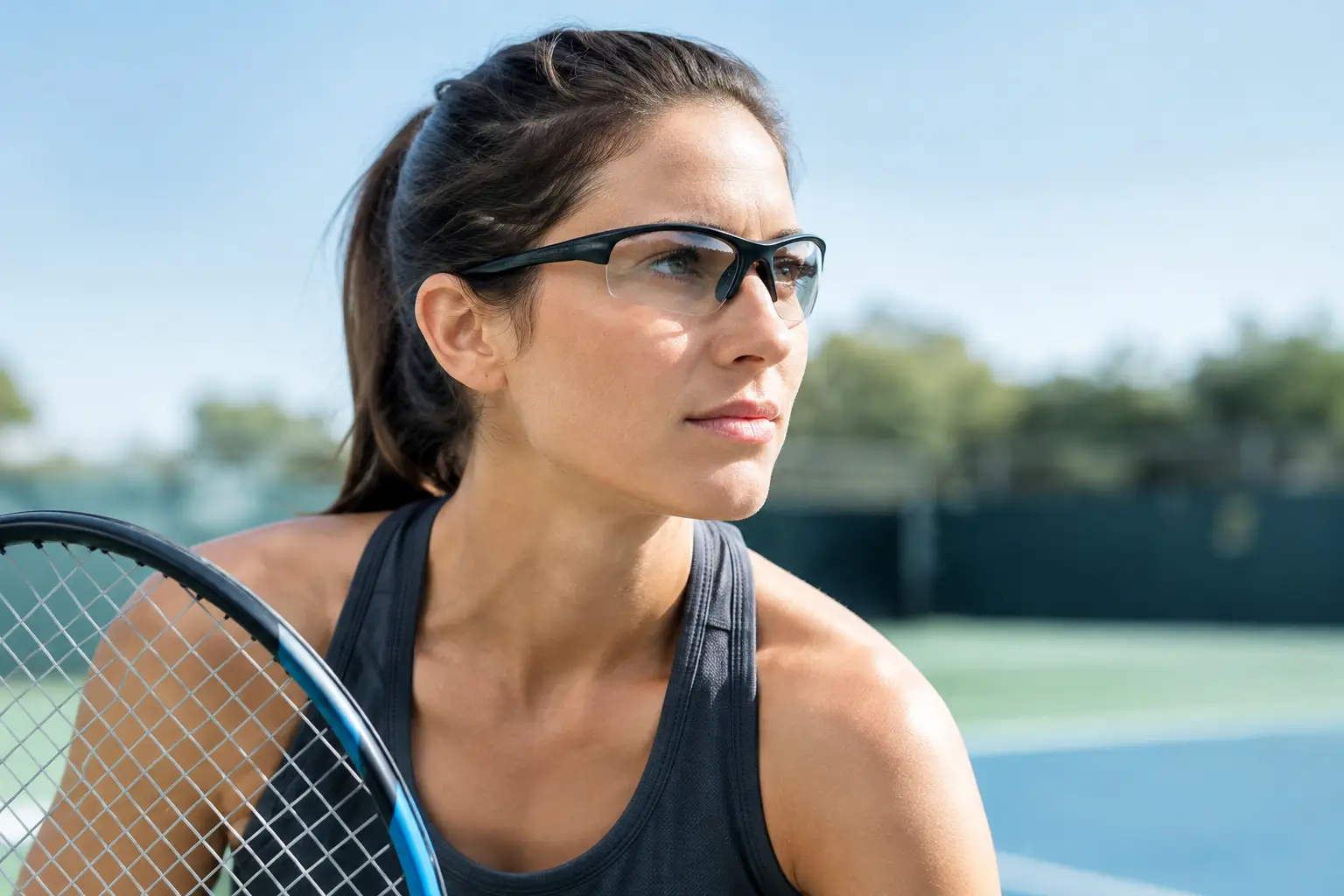
A ball takes an unexpected bounce. A bike ride turns downhill. Your child lands hard after a rebound, then pushes their glasses back into place for the third time that game. These are the moments when prescription sports eyewear stops being an accessory and starts acting like essential equipment. Clear vision matters, but so do stability, coverage, comfort, and the confidence to move without worrying about your glasses.
Prescription Sports Eyewear Is Built for Movement
Everyday glasses are designed for conversations, commutes, classrooms, and screens. They are not automatically designed for sweat, sudden impact, changing light, or repeated motion. Even a well-made everyday frame can slide down the nose during a run, shift during a tennis serve, or leave too much exposure around the eyes on a windy ride.
Sports eyewear approaches the job differently. The frame is typically more secure, more flexible, and shaped to remain stable while the wearer moves. Many styles use curved temples, adjustable nose pads, rubberized contact points, or an elastic strap. The lens shape may offer broader side coverage, while impact-resistant lens materials can be selected for the activity.
That does not mean every athlete needs the same wraparound frame. A golfer, swimmer, cyclist, pickleball player, and child playing basketball have different visual demands. The right choice depends on the sport, the prescription, the wearer’s face shape, and how the eyewear needs to feel after an hour of activity, not just in front of a mirror.
Start With the Sport, Not the Frame
The most useful question is not, “Which sports glasses look good?” It is, “What needs to happen while I am wearing them?” A frame that feels excellent for trail running may be awkward under a hockey helmet. Swim goggles need a close, watertight seal. Court sports call for stable coverage and a design that is less likely to shift during quick lateral movement.
For cycling, running, baseball, and field sports, wider coverage can help reduce exposure to wind, dust, and bright side light. For racquet sports and basketball, secure fit and lens durability often take priority. For skiing or snowboarding, compatibility with a helmet and changing outdoor light become part of the conversation. And for swimming, custom prescription goggles let swimmers see the lane, the wall, and the people around them without relying on contact lenses or trying to make regular glasses work near water.
Parents often face a different version of the same decision. A child may need glasses for school, then need something far more stable for soccer, gymnastics, or baseball. A dedicated sports pair can remove the constant negotiation between protecting everyday frames and letting a child participate freely.
Helmets, Straps, and Real-World Gear Matter
Bring the details into the fitting conversation. Do you wear a bike helmet, a batting helmet, a ski helmet, or hearing protection? Do you need to take the eyewear on and off with gloves? Do you wear a cap or visor? Small factors can determine whether a frame becomes a reliable part of your routine or stays in its case.
A strap can be valuable for younger athletes and high-motion activities, but it should not create uncomfortable pressure behind the ears or at the bridge of the nose. Likewise, a close-fitting wrap frame may provide excellent coverage, yet its curve can affect how a prescription lens is made. This is where frame selection and lens design need to be considered together.
Lens Choices Should Match the Way You Play
Lens material is a central part of prescription sports eyewear. Polycarbonate and Trivex are commonly considered for active eyewear because they are lightweight and impact resistant. The better option depends on the prescription, the frame, the activity, and the visual priorities of the person wearing them.
For outdoor sports, lens tint is not simply about making things darker. The goal is usable contrast and comfortable vision in the conditions you actually encounter. A cyclist who starts before sunrise may have different needs than someone who plays afternoon tennis. A polarized lens can be helpful around reflected glare from water, pavement, or snow, but it is not the automatic answer for every sport. Some wearers prefer to read digital displays clearly, while others need a lens choice that works across more varied light.
Photochromic lenses can be a practical option for activities that move between shade and sun. They may suit a walker, runner, or golfer who wants one pair for changing daylight. Still, they have trade-offs. Their response can vary with temperature and light conditions, and they may not replace the benefit of a dedicated sun lens for every outdoor routine.
For indoor sports, a clear lens is often the right place to start. It preserves natural color perception and provides protection without reducing light. Anti-reflective coating can also make sense, particularly under bright gym lighting, where reflections on the lens can be distracting.
Fit Is Part of the Protection
A sports frame that is technically appropriate but poorly fitted will not perform as intended. If it slides when you look down, presses at the temples, pinches the bridge, or leaves gaps in the wrong places, it will quickly become something you avoid wearing.
Proper fit is especially important with higher prescriptions and curved frames. As a frame wraps around the face, lens positioning, vertex distance, and optical alignment can have a greater effect on how natural the view feels. Some prescriptions work beautifully in a wrap style. Others may be better suited to a less curved sports frame, an insert system, or a custom approach. Honest advice here is more useful than forcing a favorite frame to do a job it cannot do well.
At XO OPTIX, a licensed optician-led fitting considers more than the numbers on the prescription. The conversation can include your sport, typical lighting, helmet use, face shape, comfort preferences, and how often you expect to wear the pair. Because your eyes do not live on an eye chart, and neither should your eyewear decisions.
Why Everyday Glasses Are Not Always Enough
It is tempting to use regular glasses for a casual game or weekend ride. Sometimes that is perfectly reasonable, especially for low-impact activities where the main goal is clear vision. But everyday frames often lack the retention, lens material, coverage, or structure that active use demands.
There is also the practical question of damage. If your everyday pair is your only pair, a broken frame can interrupt work, driving, school, and everything else that depends on clear sight. A separate sports pair gives your daily eyewear a break while giving you a solution designed for movement.
For contact lens wearers, non-prescription sport sunglasses or protective eyewear may be an excellent choice. Others prefer the reliability of prescription lenses, especially in dry, windy, dusty, or water-based environments. Neither approach is universally better. It depends on comfort, activity length, prescription needs, and personal routine.
Sports Eyewear for Children Needs Room to Grow
Children are rarely gentle on glasses, especially when sports are involved. The priority is a comfortable, secure fit that encourages them to wear the eyewear consistently. A frame that looks too grown-up, feels too tight, or fogs too easily may be abandoned quickly, no matter how well it performs on paper.
A thoughtful fitting accounts for a child’s facial proportions, the sport’s movement and contact level, and whether a strap is helpful. It also leaves room for everyday reality: sweaty practices, a backpack, rushed change rooms, and the occasional missed equipment bag. For families in Coquitlam, Port Coquitlam, Port Moody, and nearby communities, having a local place for adjustments can make a meaningful difference over a busy season.
A Better Fitting Starts With a Few Specific Questions
Before choosing a frame, it helps to know what you want the pair to solve. Consider when and where you play, whether you need helmet compatibility, and if the eyewear will be used indoors, outdoors, or both. Think about light conditions, the likelihood of contact, and whether you need one versatile pair or a specialized solution for a single sport.
Bring your current glasses if you have them. They reveal useful information about fit, lens thickness, wear patterns, and what has frustrated you before. If you already know that your glasses slide, fog, or leave marks on your nose, say so. Those details are not minor. They guide a more comfortable result.
The right prescription sports eyewear should feel reassuring rather than precious. It should let you watch the ball, follow the trail, see the lane line, or keep up with your child from the sidelines without repeatedly thinking about your glasses. The goal is simple: eyewear that stays focused on the activity, so you can too.
Leave a Reply