
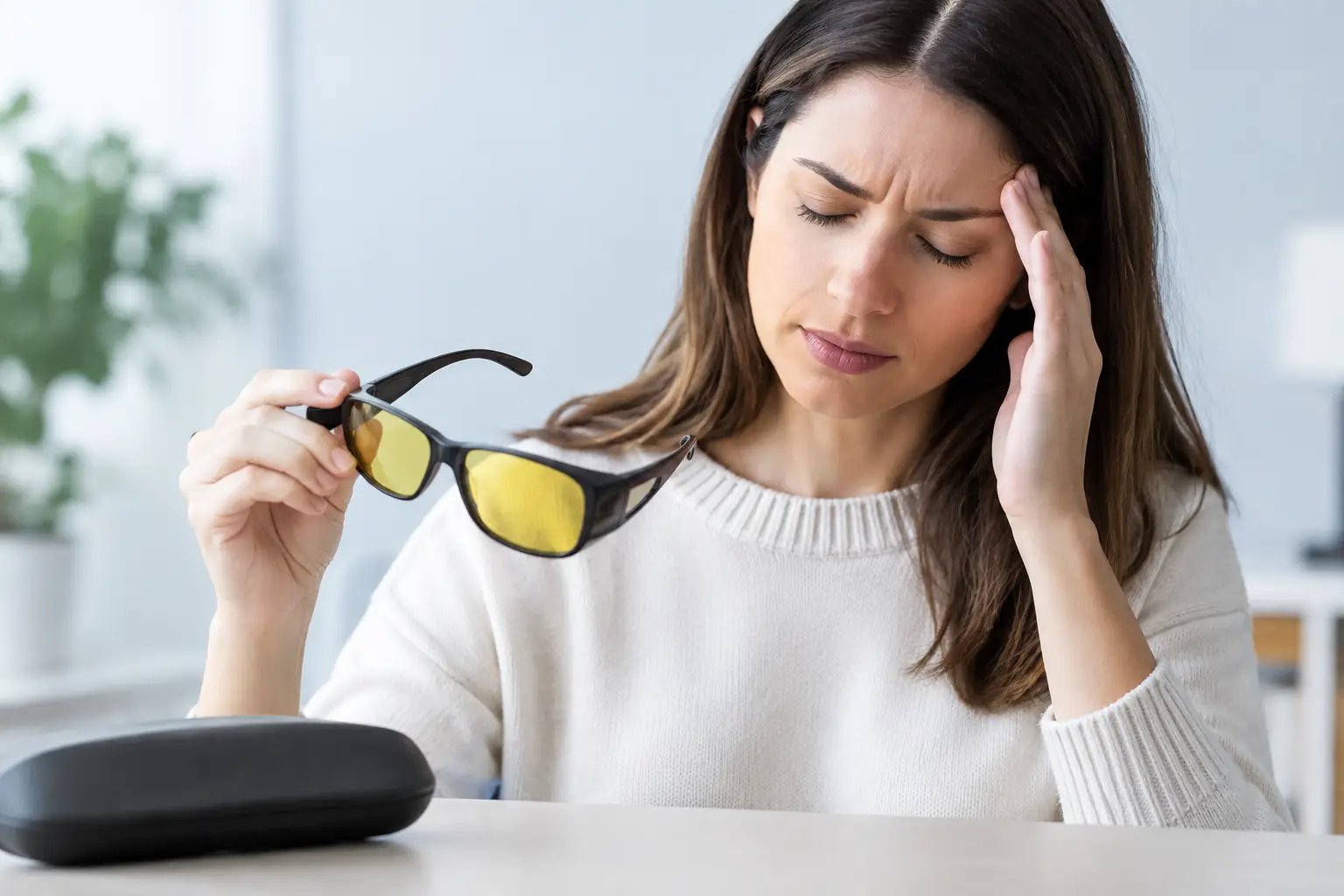
A pair of tinted lenses may look simple, but the question behind them is not: are migraine lenses FDA cleared? If light sensitivity is part of your migraine experience, you deserve a clear answer before investing in eyewear. The short version is that many products described as migraine lenses are not FDA cleared in the way people commonly mean. Some may be FDA registered, while others are sold as general optical products. Those labels are not interchangeable.
For people comparing options such as Avulux lenses, precision matters. Regulatory language can help you understand what a product is – but it does not predict exactly how comfortable it will feel in your workday, on a screen, under office lighting, or behind the wheel.
Are migraine lenses FDA cleared, registered, or approved?
These terms are frequently used as if they mean the same thing. They do not.
FDA approval is generally associated with higher-risk medical products that undergo a formal review process before they can be marketed. FDA clearance usually refers to the FDA’s 510(k) process, where a manufacturer demonstrates that a device is substantially equivalent to another legally marketed device. FDA registration, meanwhile, generally means a company has registered its establishment and listed a device with the FDA. Registration itself does not mean the FDA has approved or cleared the product.
That distinction is especially relevant for eyewear. A lens can be made for a health-related use, such as managing light sensitivity associated with migraine, without being FDA cleared through the 510(k) pathway. It may instead be regulated under a different device category or be exempt from premarket clearance requirements.
So, when someone asks whether migraine lenses are FDA cleared, the accurate response is: it depends on the specific product and its regulatory classification. Do not treat “FDA registered” as a synonym for “FDA cleared” or “FDA approved.” A responsible retailer or manufacturer should be able to describe the product’s status plainly, without turning a regulatory term into a bigger promise than it is.
What this means for Avulux migraine lenses
Avulux lenses are marketed for people with light sensitivity associated with migraine. They use a precision filter intended to selectively filter portions of visible light rather than simply making everything darker. That is different from a standard gray sun lens, a fashion tint, or an all-purpose blue-light filter.
In the United States, Avulux has been presented as an FDA-registered medical device. That does not mean the lenses are FDA approved or FDA cleared through a 510(k) review. It means the language needs to stay specific: registered is registered.
For customers in Canada, FDA status can still be useful context, especially when researching a product online. But it is a U.S. regulatory framework, not a shortcut for evaluating a lens in your own life. The better question is not only, “What does the label say?” It is also, “Is this lens format appropriate for where and when I need it?”
A person who struggles under fluorescent lighting may need something different from someone bothered most by screens, bright grocery aisles, outdoor glare, or the transition from a dark room to a sunny day. Your eyes do not live on an eye chart. They move through meetings, commutes, classrooms, errands, and family life.
Why the wording matters
Marketing around migraine and light sensitivity can be emotionally charged for good reason. People looking for relief have often already tried turning down screen brightness, changing bulbs, wearing hats, avoiding glare, or reaching for whichever tinted glasses are nearby. Vague claims can make it difficult to compare products thoughtfully.
FDA clearance, registration, and approval describe regulatory pathways. They are not a guarantee that a lens will prevent migraines, work for every wearer, or replace a person’s usual migraine care. They also do not tell you whether the frame will sit comfortably, whether the tint will feel too strong indoors, or whether the lens can be made in your prescription.
That is where hands-on optical guidance matters. A lens can be technically interesting and still be the wrong choice if it does not fit your daily routine. Conversely, a thoughtfully selected pair can be easier to wear because the frame, prescription, lens format, and use case have all been considered together.
How to evaluate migraine-filter eyewear with confidence
Start by separating medical claims from practical questions. A product’s regulatory status may be relevant, but it should be one part of a much larger conversation. Ask what the lens is designed to filter, whether it is intended for indoor wear, outdoor wear, or both, and how it may affect color perception and brightness.
Then consider your visual needs. If you wear a prescription, the lens should be evaluated alongside that prescription rather than as an afterthought. Single-vision lenses, progressives, and more complex prescriptions can each shape what is practical. Frame choice matters too. A frame that slides, pinches, or leaves distracting gaps around the sides can make even a well-chosen lens harder to wear.
For many people, flexibility is useful. A dedicated pair may suit desk work or time under difficult indoor lighting, while a custom clip-on can make it easier to use a preferred prescription frame. Some wearers value a secondary pair for specific situations rather than expecting one lens to solve every light environment.
It is also wise to be candid about trade-offs. Selective filters can change how colors appear. A tint that feels calming in a bright office may not be your first choice for every task. If you drive, work with color-critical materials, play sports, or move frequently between indoors and outdoors, those details should be part of the fitting conversation from the start.
Questions worth asking before you buy
The most useful questions are direct ones. Ask whether the product is FDA cleared, FDA approved, FDA registered, or simply marketed as an optical lens, and ask the provider to explain the difference. If a claim sounds broad, ask what it actually means in everyday use.
Also ask whether you can compare lens formats in person, how the lens will work with your prescription, and what frame styles are suitable. A careful fitting should account for lens position, frame size, temple comfort, nose fit, and your usual viewing posture. These details can make a real difference when you are trying to wear eyewear consistently.
At XO OPTIX, the conversation is designed around how you live, not around pressure to choose the most complicated option. For someone in Coquitlam or the wider Tri-Cities area exploring Avulux, that may mean comparing frames and custom clip-on possibilities, discussing prescription needs, and deciding whether a dedicated pair makes sense for the environments that challenge them most.
A clear label is only the beginning
It is reasonable to ask whether migraine lenses are FDA cleared. It shows you are looking past the packaging and asking for evidence and clarity. Just remember that “FDA registered” and “FDA cleared” are different statements, and neither replaces a thoughtful assessment of fit, prescription, visual demands, and comfort.
The right next step is a conversation grounded in your real light environments. Bring the situations that make your eyes complain most – the screen setup, the overhead lighting, the commute, the classroom, the weekend outdoors – and use them to guide the lens decision.
Leave a Reply