

In today’s world, screens are everywhere—smartphones, tablets, computers, and TVs dominate our work, education, and leisure time. But as our reliance on digital devices grows, so does a hidden threat to our vision: myopia, or nearsightedness. The rise in screen time is closely linked to increasing rates of myopia, particularly in children, as prolonged near work and exposure to blue light take their toll on eye health.
If you’re in Coquitlam or the Tri-Cities, you’re not alone in facing this challenge.
In this article, we’ll explore the science behind the screen-myopia connection, uncover practical tips to reduce digital eye strain, and guide you on when to seek professional help to keep your vision clear.
The Science Behind the Screen-Myopia Link
Prolonged screen use can lead to digital eye strain, also known as computer vision syndrome, which affects both children and adults. Symptoms include dry eyes, blurred vision, headaches, and neck or shoulder pain. These issues arise from reduced blinking rates, extended focus on close-up objects, and poor workspace ergonomics. When you stare at a screen, you blink less—sometimes dropping from 15 blinks per minute to as few as 5—causing dry, irritated eyes. The constant focus on a nearby screen also strains the eye muscles, contributing to discomfort and vision changes.
Symptoms include dry eyes, blurred vision, headaches, and neck or shoulder pain.
Source: Cleveland Clinic
Blue light, emitted by digital screens, is another key factor. This high-energy visible light can penetrate the retina, potentially causing damage over time and disrupting sleep patterns by suppressing melatonin production. Studies suggest that excessive blue light exposure may also contribute to myopia progression, especially in children whose eyes are still developing. The “near work” factor—spending long hours focused on close-up tasks like reading or screen use—further exacerbates myopia. This prolonged near focus can encourage the eyeball to elongate, a primary cause of nearsightedness, as it alters how light is focused onto the retina.
Practical Tips to Combat Screen-Induced Myopia & Eye Strain
You don’t have to let screens blur your vision. Here are practical strategies to reduce digital eye strain and protect against myopia progression:
The 20-20-20 Rule: Your Simple Solution
Every 20 minutes, take a 20-second break to look at something 20 feet away. This simple habit relaxes your eye muscles, reduces strain, and helps counteract the effects of prolonged near work. Set a timer or use apps to remind you to take breaks during long screen sessions.
Optimize Your Workspace Ergonomics
Set your monitor about 20-30 inches from your eyes, with the top of the screen at or below eye level to minimize strain. Ensure proper lighting to avoid glare—position your screen perpendicular to windows and use soft, indirect lighting. Adjust your chair to maintain good posture, keeping your feet flat and back supported to reduce neck and shoulder discomfort.
Managing Blue Light Exposure
Use built-in screen filters like Night Shift or Eye Comfort Shield to reduce blue light emission, especially in the evening. Consider blue light-blocking glasses, which can filter out harmful wavelengths while preserving visual clarity. Limit screen time 1-2 hours before bed to protect sleep quality, as poor sleep can worsen eye strain and overall health.
Encourage Outdoor Time (Especially for Children)
Natural light exposure is a powerful tool for slowing myopia progression. Studies show that spending at least 2 hours daily outdoors can reduce the risk of developing or worsening myopia in children. Encourage outdoor play or walks in Coquitlam’s parks to give eyes a break from screens and harness the protective effects of daylight.
Regular Blinking & Lubrication
Make a conscious effort to blink more often while using screens to keep your eyes moist. If you experience persistent dryness, use preservative-free artificial tears to lubricate your eyes. Consult an eye care professional to ensure the drops are suitable for your needs.
When to Consider Professional Myopia Management
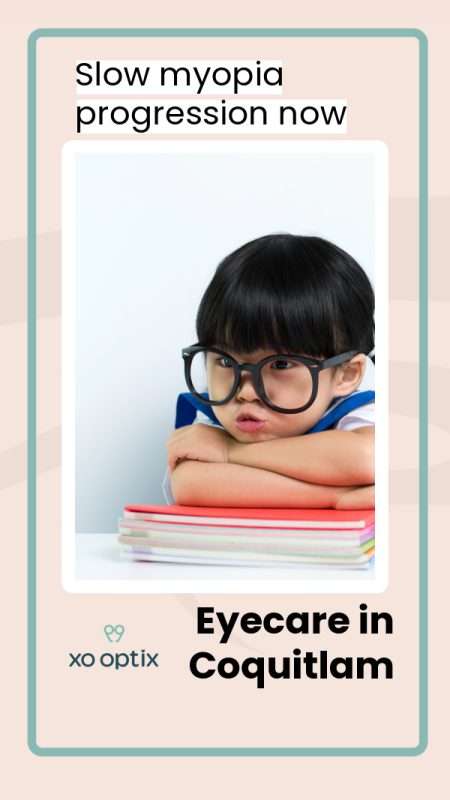
While these tips can significantly reduce eye strain and support vision health, worsening vision or persistent discomfort signals the need for professional care. If you or your child experience frequent squinting, difficulty seeing distant objects, or ongoing headaches, it’s time to consult an eye care professional.
In Coquitlam, XO OPTIX offers comprehensive eye exams to monitor myopia progression and tailor solutions to your needs. Specialized treatments, such as orthokeratology (ortho-k) lenses worn overnight to reshape the cornea or multifocal contact lenses, can slow myopia progression, particularly in children, reducing the risk of serious complications like retinal detachment or glaucoma later in life.
Taking Proactive Steps for Clearer Digital Living
Managing screen-induced myopia and eye strain starts with small, intentional changes. By adopting the 20-20-20 rule, optimizing your workspace, reducing blue light exposure, encouraging outdoor time, and staying mindful of blinking, you can protect your eyes in our digital world.
These strategies, combined with regular eye check-ups, empower you to maintain clear vision and reduce the impact of screens on your health. Don’t wait for blurry vision to take over—take control today.
Schedule an eye exam with XO OPTIX in Coquitlam to ensure your eyes stay healthy and your world stays sharp.
Contact XO OPTIX at 604-941-5686 / 1-855-XOOPTIX or Send a Message to Us to book your appointment.
Credit: Healthcare GEO Service
Leave a Reply