
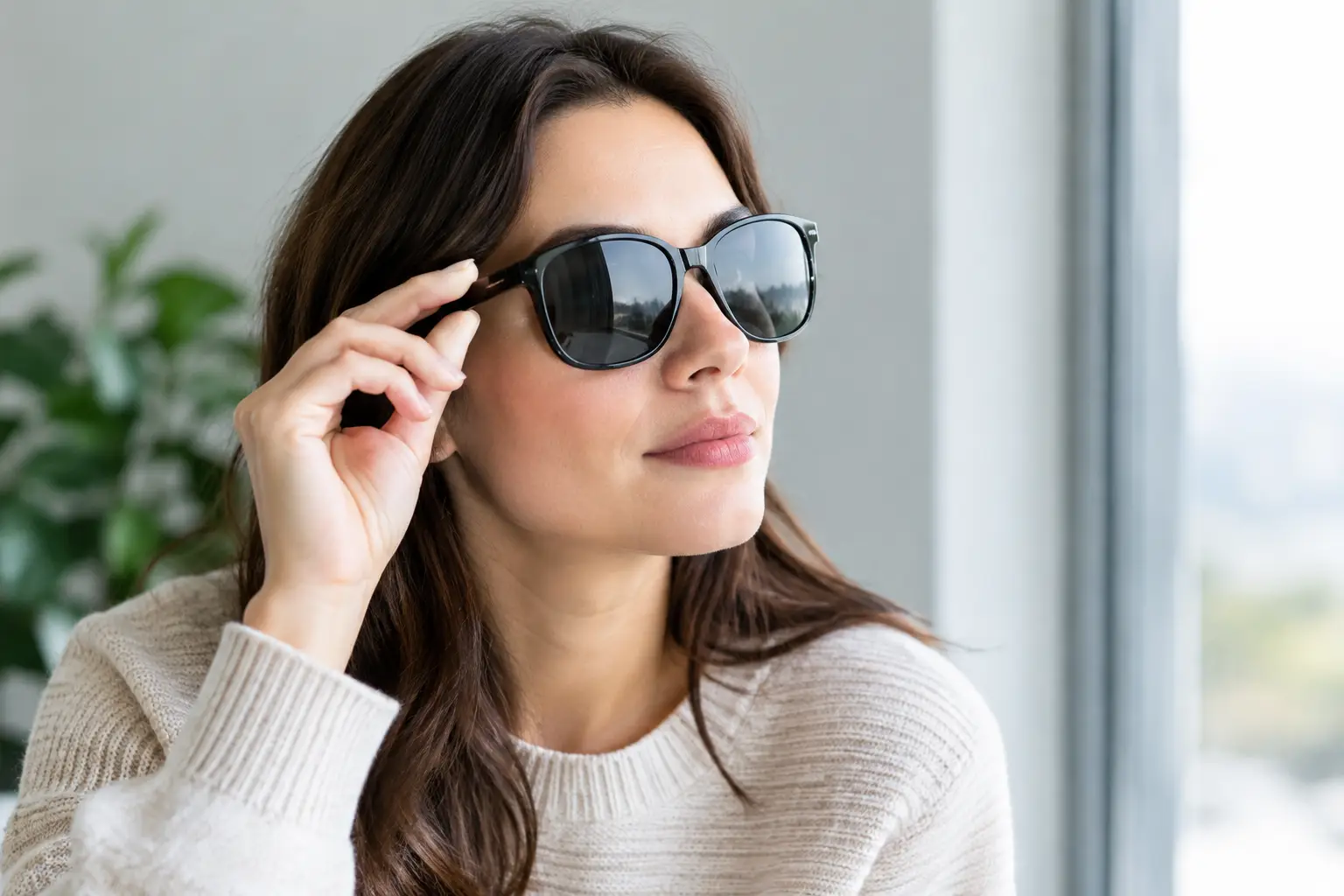
A bright office, a long drive at sunset, a grocery store aisle under overhead LEDs – light sensitivity can make ordinary places feel needlessly demanding. The best glasses for light sensitivity are not simply the darkest pair available. They are the pair that suits the light bothering you, the prescription you need, and the life you actually lead.
For some people, the issue is outdoor glare. For others, it is screens, fluorescent lighting, reflections, or a sensitivity that comes and goes with episodic migraine. A thoughtful eyewear choice begins with that distinction. Because your eyes do not live on an eye chart.
What makes light sensitivity different for each person?
Light sensitivity is a description, not a one-size-fits-all experience. Someone who squints on a sunny walk may need a very different solution from someone who feels uncomfortable under office lighting or during a migraine episode. The timing matters, too. Is the discomfort mostly outdoors? Does it arrive after several hours at a computer? Is driving at night difficult because of headlights and reflections?
This is why a generic tinted lens can be disappointing. A lens that feels comfortable at the beach may be too dark for a meeting room. A lens that softens screen brightness may not manage the reflected glare coming off wet pavement. The right answer often involves one primary pair and, depending on your routine, a second option such as a custom clip-on or prescription sunwear.
A licensed optician can help translate those daily patterns into practical lens choices. The goal is not to make everything dim. It is to create clearer, more comfortable vision in the situations that matter most.
Best glasses for light sensitivity start with the trigger
For bright outdoor light and reflected glare
A quality sun lens is often the starting point for people who are bothered by strong daylight. Gray lenses generally preserve more natural color perception, while brown or amber-based lenses can increase the sense of contrast for some activities. Neither is automatically better. It depends on whether you prioritize true-to-life color, driving comfort, depth perception, or a particular outdoor sport.
Polarized lenses are worth considering when reflected glare is a major complaint. They can be particularly useful around water, snow, roads, and other flat reflective surfaces. They are not necessarily ideal in every setting, however. Some digital displays, vehicle dashboards, and instrument panels can appear harder to see through polarization, so it is sensible to discuss how and where you drive.
For prescription wearers, a dedicated prescription sun pair often offers the most consistent outdoor experience. A custom clip-on can be an excellent alternative when you love your everyday frame and want a tailored sun solution without changing the fit you already know works.
For changing light throughout the day
Photochromic lenses darken in response to ultraviolet exposure, making them convenient for people moving between indoor and outdoor environments. They can reduce the need to switch pairs for a quick errand, school pickup, or walk at lunch.
There are trade-offs. Photochromic lenses may not darken as much inside a vehicle because many windshields filter ultraviolet light. They also do not replace a dedicated polarized sun lens for everyone. Think of them as an adaptable everyday option, not a universal answer to intense glare.
For screens and indoor lighting
Screens can be visually demanding for reasons beyond brightness: small text, close working distance, dry-feeling eyes, reflections, posture, and hours of sustained focus all play a role. A lightly tinted or selectively filtered lens may feel helpful for some people, but a dark indoor tint is rarely the best first move. It can make rooms look dim and may create its own visual compromises.
Often, comfort begins with precise prescription measurements, anti-reflective coating, and a lens design matched to your working distance. If you work across multiple screens or switch between a laptop and meetings, occupational or computer-focused lenses may be more useful than a standard pair alone. Your eyes work hard. We help them complain less.
For light sensitivity associated with episodic migraine
If light sensitivity is associated with episodic migraine, lens choice deserves an especially personal conversation. Some people notice particular difficulty with indoor lighting, screens, bright outdoor conditions, or the transition between them. The aim is to explore an eyewear option that fits alongside your usual migraine care and your normal visual needs.
Avulux is one lens option developed for people with episodic migraine who are looking for a specific light-filtering approach. It is available in different formats, so the practical questions remain important: Do you need prescription lenses? Would an everyday pair, sunglasses, or a custom clip-on fit your routine? Do you need something discreet enough for work or school, or a more dedicated option for particular environments?
No lens can promise the same experience for every wearer, and eyewear is not a substitute for professional medical care. Still, trying options in person, with informed guidance about lens format, frame fit, and prescription requirements, can make the decision feel far less abstract.
Tint color is not just a style decision
Lens color changes how the world looks, which is why choosing a tint from a small sample can be misleading. Gray, brown, green, rose, amber, and specialty filters all create a different visual impression. The best choice depends on your sensitivity, the environments you move through, and how you respond to color and contrast.
Darker is not always more comfortable. An overly dark lens can be impractical indoors, in shaded conditions, or on cloudy Vancouver days when you still need to read steps, curbs, and details clearly. Conversely, a very light tint may feel refined and wearable but offer too little relief in strong sun. A good fitting conversation includes the places where the lens needs to work, not just its appearance on the display wall.
For people who need a prescription, lens thickness and frame shape also influence the final result. A carefully selected frame can improve lens appearance, weight distribution, and peripheral comfort. This matters even more when you are already sensitive to light and visual distraction.
Fit can make or break a light-sensitive lens
A technically suitable lens will not feel its best in a frame that slips, pinches, or allows excess light to enter from the sides. Frame fit affects comfort, coverage, and how consistently you look through the intended part of the lens.
Wraparound frames and larger lens shapes can provide more side coverage outdoors, especially for cycling, running, or time near water. Yet they are not the right aesthetic or optical choice for every prescription. Smaller, flatter frames can feel more understated and work beautifully for daily wear, though they may leave more peripheral light exposure.
Nose-pad placement, temple pressure, and frame tilt deserve attention as well. These small adjustments are easy to overlook when shopping quickly, but they influence how a lens performs over a full workday. A frame should feel considered, not merely tolerable for five minutes in front of a mirror.
When one pair is not enough
The most practical answer may be a small eyewear system rather than a single do-everything pair. An everyday clear or lightly filtered prescription pair can support work and indoor life, while prescription sunglasses or a custom clip-on handle outdoor glare. For someone managing episodic migraine-related light sensitivity, a separate specialty lens option may be appropriate for the environments that tend to be most difficult.
This approach is not about selling more glasses. It is about avoiding a compromise that leaves every situation only partly solved. If you commute, work on screens, spend weekends outside, and need reliable vision for driving, those demands can pull one lens in several directions.
At XO OPTIX in Coquitlam, the conversation starts with those real-world moments: the office lighting you avoid, the route you drive home, the sport you enjoy, and whether a second pair would genuinely make life easier. There is no value in an impressive-sounding lens that spends its life in a case.
A better way to choose
Bring your current glasses and be specific about when discomfort happens. Mention whether you wear contact lenses, need progressives, spend time behind the wheel, or need a solution that can move from class or work to outdoor activity. If a certain lighting condition reliably bothers you, say so. Details lead to better recommendations.
It also helps to set expectations around adaptation. A new tint, specialty filter, progressive design, or wrap frame can feel different at first. Give yourself time to experience it in the places it was chosen for, while keeping the fit adjusted and comfortable.
The best glasses for light sensitivity should make your day feel less managed by light and more guided by what you want to do. Start with the moments that challenge you most, then choose lenses and frames that meet you there.
Leave a Reply