

Did you know that millions of pairs of eyeglasses end up in landfills each year? It’s a staggering statistic that highlights the need for sustainable eyewear practices.
Why Recycle Eyewear?
Recycling old eyewear helps to reduce the volume of waste sent to landfills. Eyewear, particularly those made from plastic and metal, can take hundreds of years to decompose.
- Environmental Impact: By recycling old eyewear, we can reduce the amount of waste in landfills.
- Social Impact: Donating used eyewear can help people in need, particularly in developing countries.
Donating used eyewear can significantly improve the quality of life for people in need, especially in developing countries where access to vision care is often limited. Many individuals suffer from vision problems (such as digital eye strain) that can hinder their ability to work, study, and perform daily tasks.
How to Recycle Your Eyewear
Check with Your Local Optometrist (Check our location in Coquitlam). Many optometrists have recycling programs in place. They can collect your old glasses and send them to organizations that recycle or donate them.
- Donate to Charity: Numerous charities accept donations of used eyeglasses. Look for organizations that work with people in need, both locally and internationally.
- Recycle Through Specialized Programs: Some organizations specialize in recycling eyewear. Research online to find programs in your area.
Clothing Drops in Coquitlam
- Crossroads Hospice Thrift Store – 2780 Barnet Hwy, Coquitlam, BC V3B 1B9, Canada
- Trinity United Church Thrift Store – 2211 Prairie Ave, Port Coquitlam, BC V3B 1V8, Canada
- The Salvation Army Thrift Store – 2850 Shaughnessy St, Port Coquitlam, BC V3C 6K5, Canada
- Value Village – 2739 Barnet Hwy, Coquitlam, BC V3E 1K9, Canada
Eco-Friendly Eyewear Choices
When selecting eyewear, look for frames and lenses that are designed to be easily repairable. This feature allows you to replace individual components as they wear out, rather than having to discard the entire pair. This not only saves money in the long run but also significantly reduces waste and promotes a more sustainable lifestyle. Many brands now offer modular designs specifically to extend the lifespan of their products, providing a practical and environmentally friendly option.
Prioritize purchasing from brands that commit to ethical and sustainable sourcing practices. This means that the materials used in their eyewear are obtained in ways that minimize environmental impact and support fair labor conditions. Ethical sourcing can include a variety of practices, such as using recycled or biodegradable materials, ensuring workers are paid fair wages, and maintaining environmentally responsible manufacturing processes. By supporting these brands, you’re helping to promote industry standards that respect both people and the planet.
Opt for eyewear made from materials that are kinder to the environment, such as recycled plastic, bamboo, or other eco-friendly alternatives. These materials typically require less energy and resources to produce and can often be recycled at the end of their life cycle. Bamboo, for instance, is a rapidly renewable resource that grows quickly and requires minimal pesticides and fertilizers. Choosing sustainable materials helps to reduce your carbon footprint and supports the development of more environmentally responsible products in the market.
- Sustainable Materials: Choose eyewear made from eco-friendly materials like recycled plastic or bamboo.
- Ethical Sourcing: Opt for brands that prioritize ethical and sustainable sourcing practices.
- Repairable Designs: Consider eyewear with repairable frames and lenses to extend their lifespan.
Eco-Friendly Brands Here in Coquitlam
At XO OPTIX, we carry a brand that covers all the bases in sustainable eyewear: Raen.
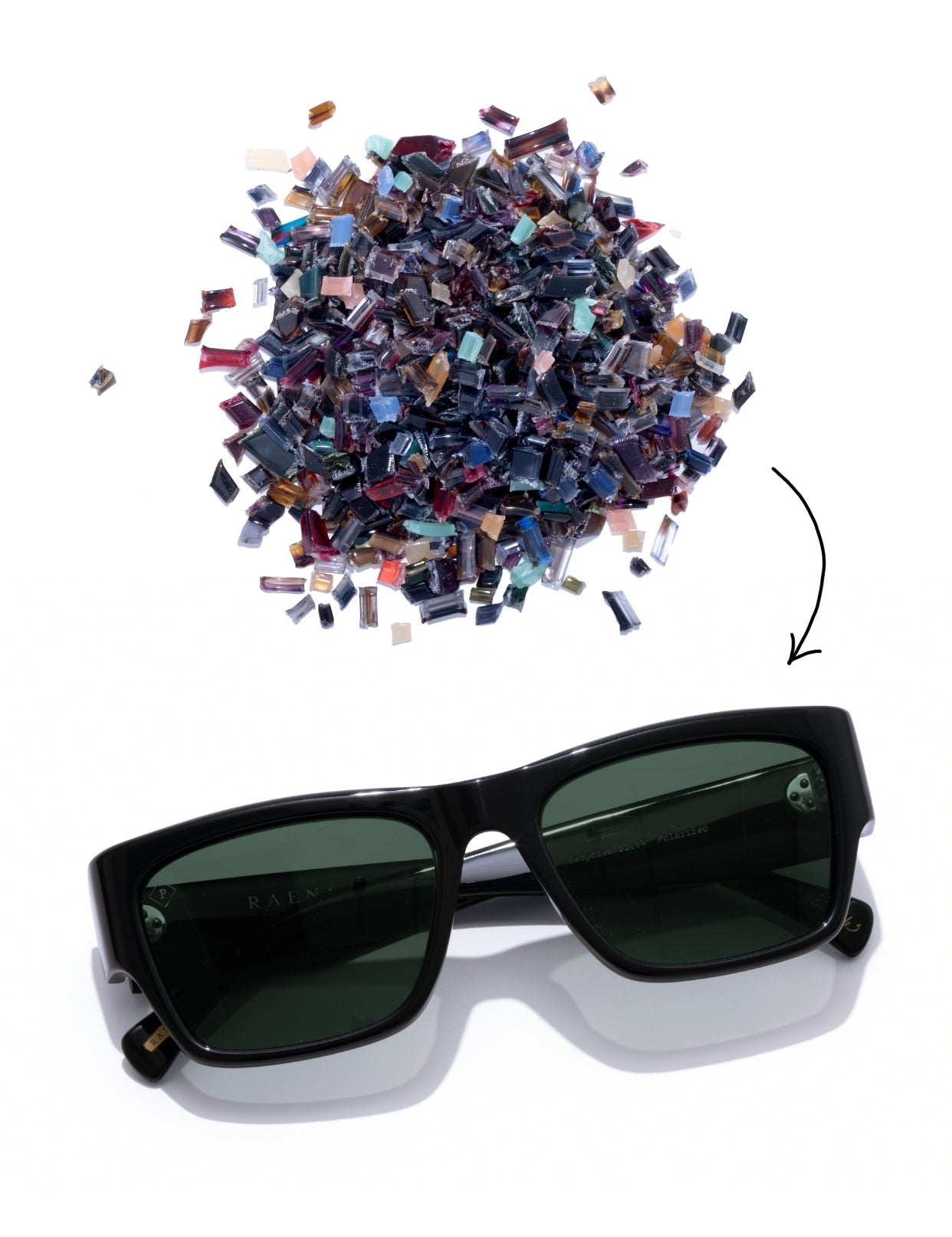
Here are a few particulars worth noting:
- Raen Recycled Black: Introducing Recycled Black, our innovative acetate crafted entirely from 100% recycled materials. By repurposing leftover materials from our acetate producers, we’ve created a luxurious black acetate. Raen produces premium frames with a reduced environmental impact.
- Raen Bio-Acetate Glasses: Showcasing our blend of classic design, modern tech, and innovative materials, we prioritize sustainability at every step. Proudly using Mazzuchelli’s M49 Bio Acetate and ZEISS SUNLENS lenses, reinforcing our commitment to environmental responsibility.
The Importance of Eye Care Equity
Access to quality eye care is a fundamental human right. By recycling and donating eyewear, we can help bridge the gap between those who have access to vision care and those who do not.
Let’s work together to create a more sustainable future for eyewear. By making conscious choices and taking simple steps, we can reduce our environmental impact and help those in need.
Leave a Reply